Red Chandelier Pitch
Clark (2008) defines a pitch as.
“An oral presentation of an opportunity to potential investors.”
As part of my long-term plans, I wish to continue developing the game I worked on in 3rd year “Red Chandelier”. Over the summer I presented my pitch to “Launchpad Games” (“Launchpad Games” is incubation programme designed to support local start-ups and provide business mentorship to students want to form their own Indie studio with their own IP). Based on the feedback I received, I have started looking for a new team to take the project forwards. To this end I pitched the game to the other master’s students on the 5/10/2022.
Overall, the feedback I received was generally positive with a few students showing interest in the game and the project. However, looking back at the pitch and the presentation there are a few areas I think I could have done differently.
The Pitch
Spinuzzi et al (2014) asked the question.
“As entrepreneurs, learn to pitch to unfamiliar markets, how do they revise their pitch decks? Specifically, what changes do they make to the claims, evidence, and argumentation complexity in their pitches?“
I should have tailored the pitch to the students and the needs of the project. The current pitch was made to present to launchpad and therefore was tailored to that goal. This was mostly due to time constraints, and in retrospect I should have spent some time editing the pitch to its new audience and presented it a week later. It also did not include any of the feedback and changes that were suggested to me. (I did not have to change any of the aspects of the game, but I feel that they would be an improvement to the user experience.)
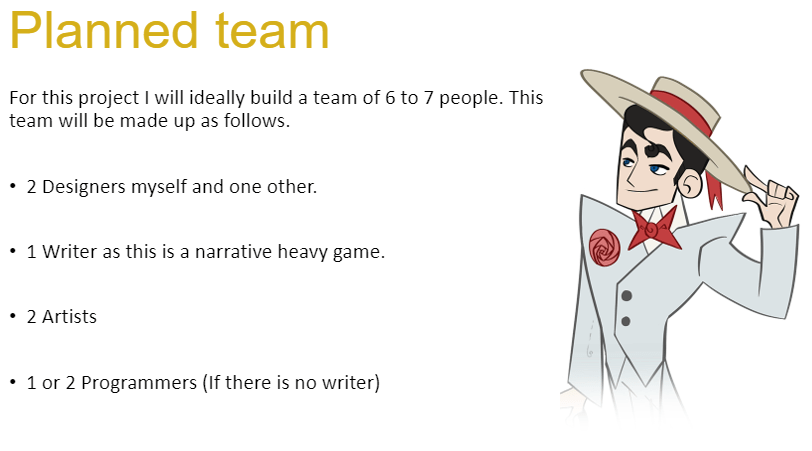
Another area where it could have been improved was slide 20 (Planned Team) rather than just showing what rolls were needed, it should have been a page explaining what skill sets were required and what would be expected from each of the roles. This would have made it easier to understand and be clear for any potential students who were interested in joining the project.
I also should have also expanded the areas I planned to change and improve with the game to include the new ideas that I have come up with in the weeks after the “Launchpad Games” pitch. This would include the multiplayer aspects and what I planned to do with this. These are explored more toughly here.
The presentation
Li (1999) observes.
“Good ideas will not be recognized unless they are effectively conveyed to others.“
The presentation suffered from a few issues.
It felt a bit rushed which was likely due to nerves as I am very passionate about this game and am a little worried, I will not be able to find a team. I suspect my worries affected the pitch a little. However, as Anderson (2013) says “Nerves are not a disaster. The audience expects you to be nervous” he goes on to say, “Acknowledging nervousness can actually improve your performance.” This view is also shared by Iacono (2001). So next time take a deep breath and keep going.
I also feel I spent too much time looking at the pitch notes on the monitor, rather than the students who I was pitching to. This could be rectified by a little more practice, so I know the pitch better. As Li (1999) states “The presentation should be rehearsed, A good rule of thumb is one slide per minute.”
Following this would also have ensured that my timing was better allowing for an overall better quality of presentation.
I also should have had prepared a playable version of the game set up on a few PCs allowing the students the opportunity to play and experience the game giving them a better understanding of what the game was about and what I was talking about.
References
Anderson, C. and Duarte, N., 2013. How to give a killer presentation. Harvard business review, 91(6), pp.121-125.
Clark, C., 2008. The impact of entrepreneurs’ oral ‘pitch’ presentation skills on business angels’ initial screening investment decisions. Venture capital, 10(3), pp.257-279.
Iacono, M., 2001. Public speaking 101. Journal of PeriAnesthesia Nursing, 16(1), pp.27-28.
Spinuzzi, C., Nelson, S., Thomson, K.S., Lorenzini, F., French, R.A., Pogue, G., Burback, S.D. and Momberger, J., 2014. Making the pitch: Examining dialogue and revisions in entrepreneurs’ pitch decks. IEEE Transactions on Professional Communication, 57(3), pp.158-181.
Li, V.O., 1999. Hints on writing technical papers and making presentations. IEEE Transactions on Education, 42(2), pp.134-137.
 deannamarshall.co.uk